Objective
The goal of this tutorial is to deploy manifest files on a Google Kubernetes Engine (GKE) cluster through FlexDeploy using the Kubernetes Plugin. For this tutorial, we will be setting up an automated deployment of an Nginx Application using the manifest yaml files which are present in a Git repository. The steps will include:- Configuring properties e.g. config file path, cloud account, and CLI path
- Cloning the manifest files from a Git repository
- Deploying the Nginx Application to a GKE cluster
- Verifying the application is successfully created on the GKE cluster
Checklist
Checklist | Description |
GCP Project Id | Project Id to connect to desired GCP project. |
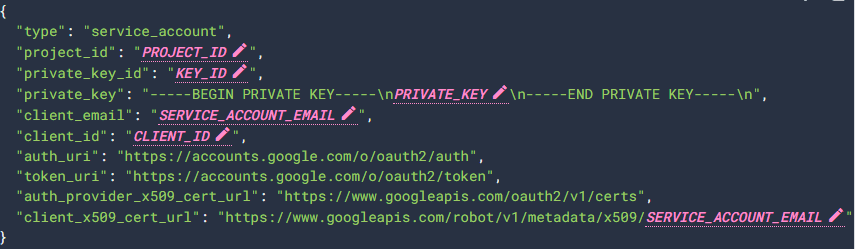
GCP Key File | The GCP Key File to connect GKE cluster. |
GCP CLI installation | GCP CLI needs to be installed where the plugin operation shall run (FlexDeploy server) |
GCP CLI in class path | GCP CLI should be added to class path on the FlexDeploy Server. Else the path can also be set under FlexDeploy environment level property |
GKE Setup | GKE cluster should be created in GCP and a kubeconfig file should be present with the context of the cluster. |
Configure Cloud account
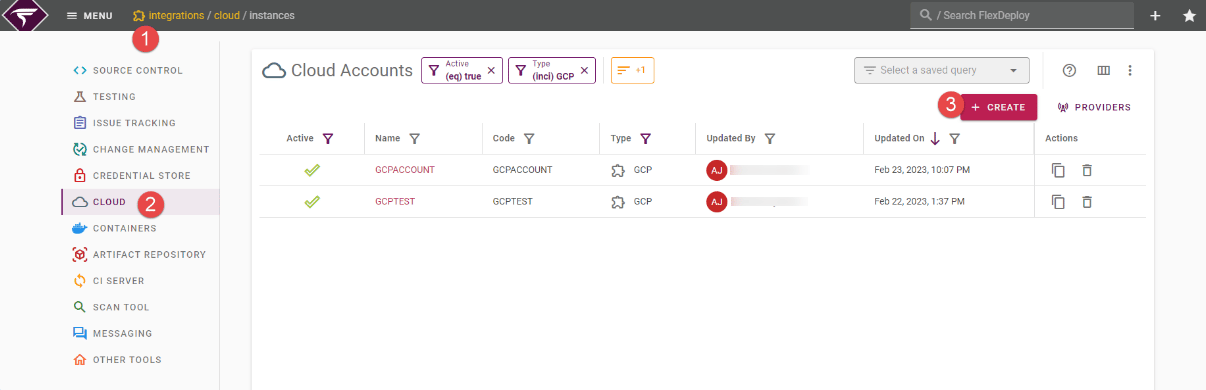
To connect with GKE cluster, we required to configure Cloud account, with credentials details. Configure GCP Cloud Account under Integration. FlexDeploy will connect to the GKE cluster and deploy the Nginx Application.- Navigate to the Integrations
- Select Cloud from the left-hand pane
- Create a new Containers account with the “+” button. Create a new Cloud account of provider type “GCP”
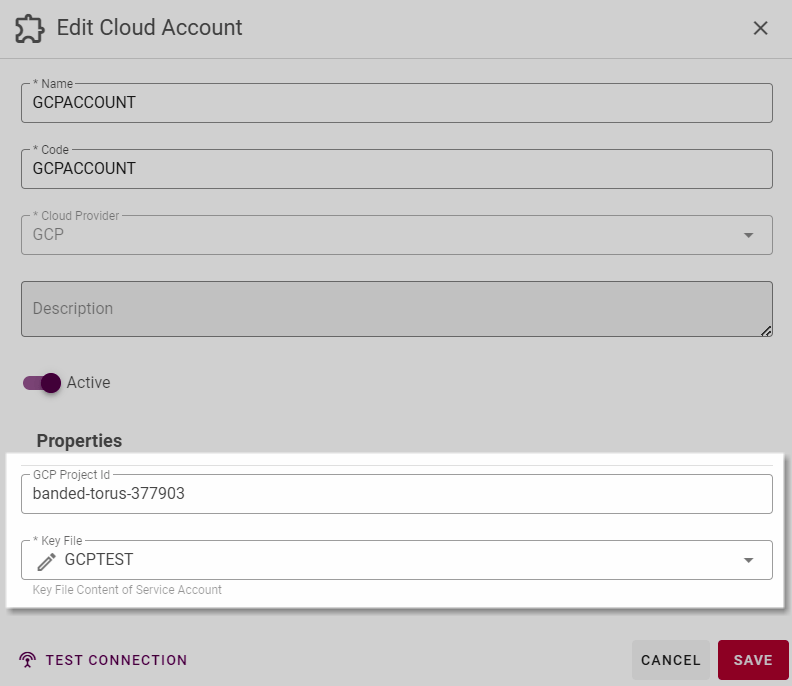
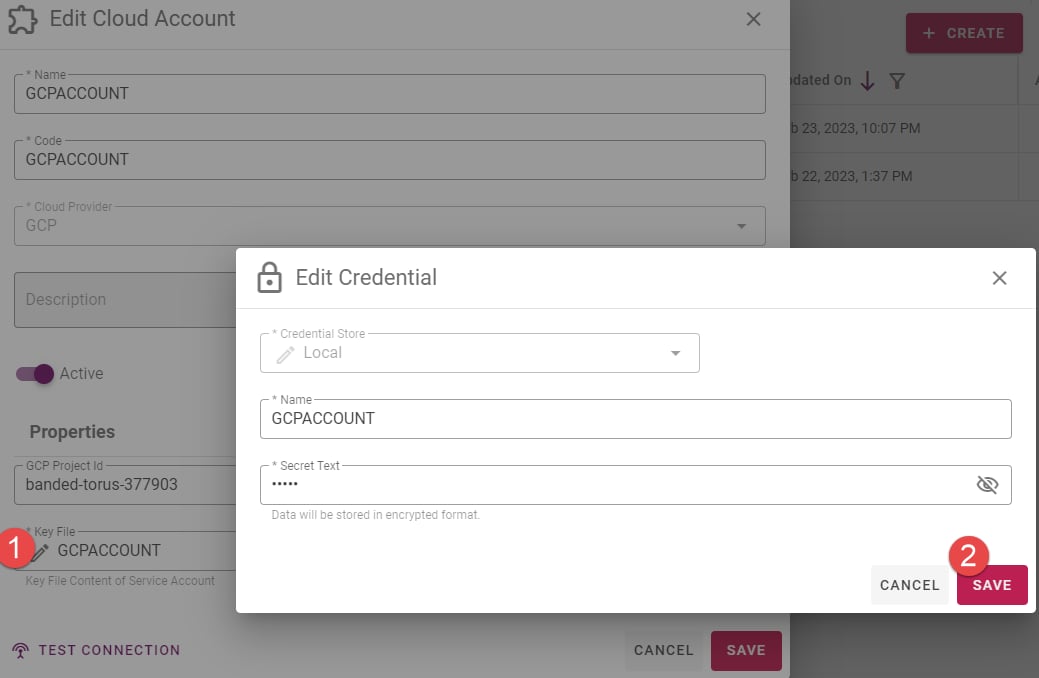
- Key File is a password field and hence needs to be kept hidden. To update the same click on the pencil icon as shown below
Git repository structure
The Git repository should contain the manifest file. The Sample Git repository structure is given below.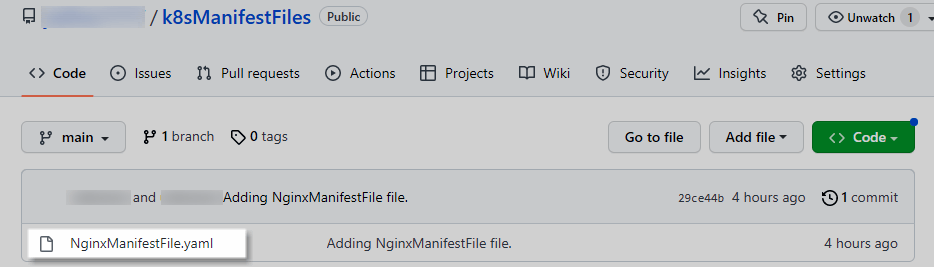
Pre-requisite
Configure service account
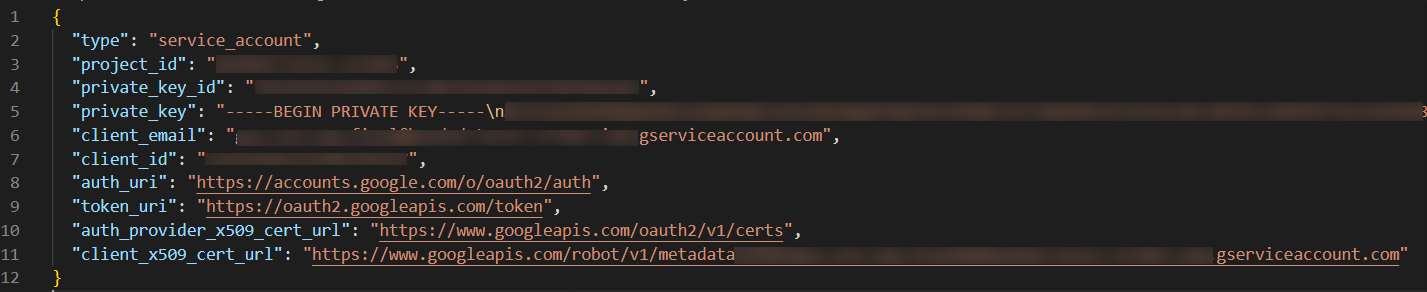
To access the GKE cluster we need to create a service account. Creating a service account to connect with the GKE cluster. Adding Kubernetes Engine Developer role for this tutorial. Different roles are available with different access(which can be assigned).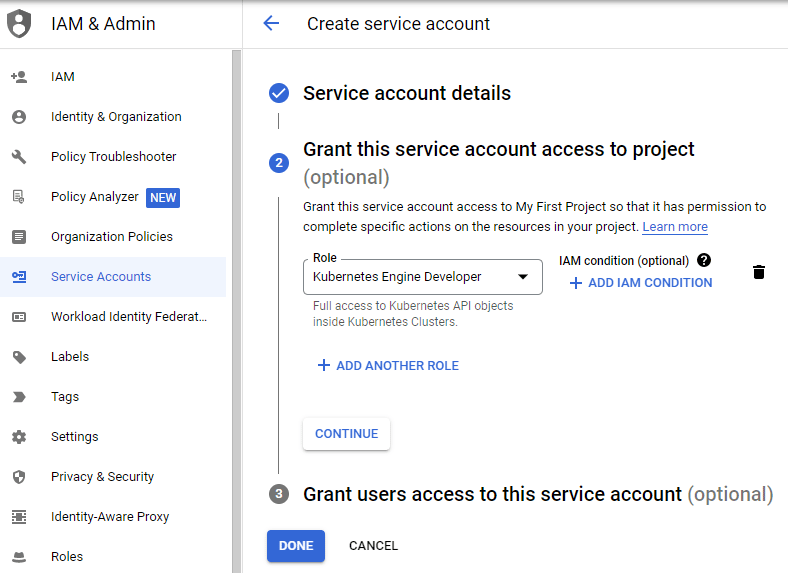
PRIVATE_KEY is the private portion of the public/private key pair:
Configure kubeconfig file
A Kubeconfig is a YAML file with the details to connect to Kubernetes Cluster using certificate/secret tokens to authenticate the cluster. This is essential for Kubernetes Plugin to connect to target GKE cluster.CLI installation
GCP CLI should be installed in the m/c where the plugin is to be executed. Preferably add GCP CLI path in m/c classpath. Please ref. https://cloud.google.com/sdk/docs/install for more information about installation.Build and Deploy Workflows
Navigate to Workflows and create a workflow using the :Create_Button: button as highlighted below.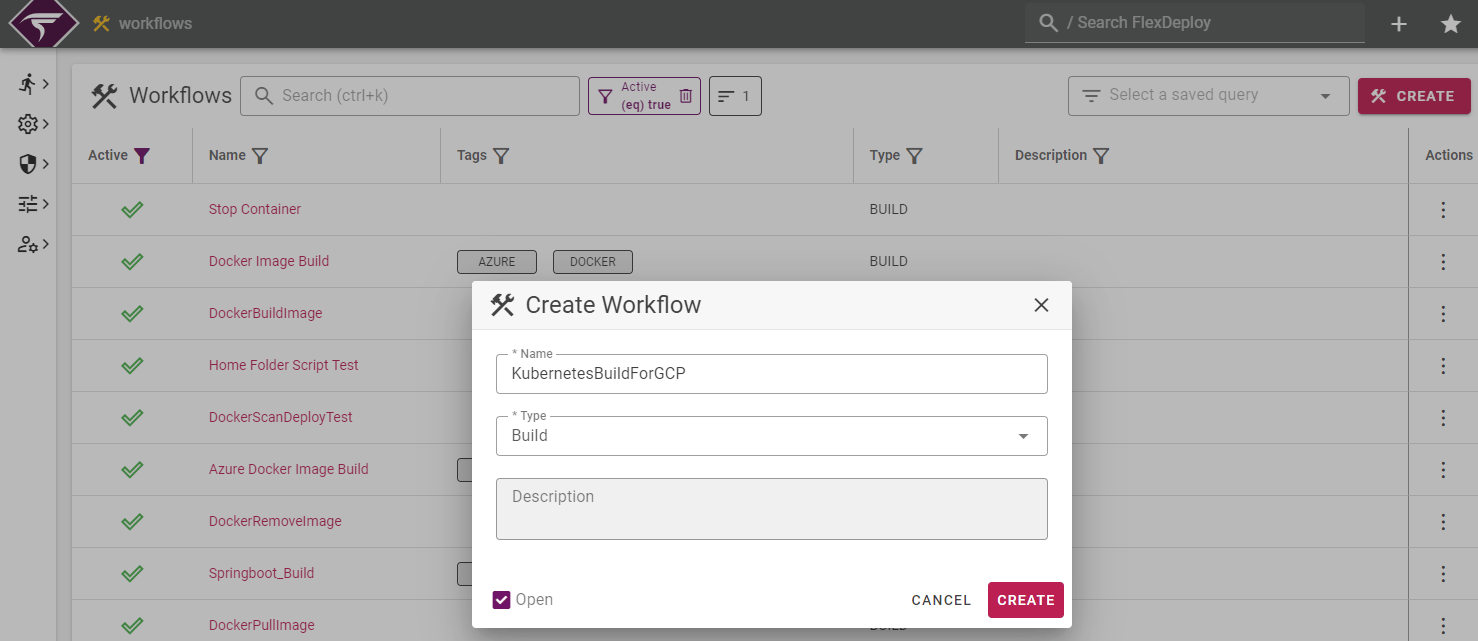
Build Workflow
Below given is a sample build workflow to copy the file from a Git repository.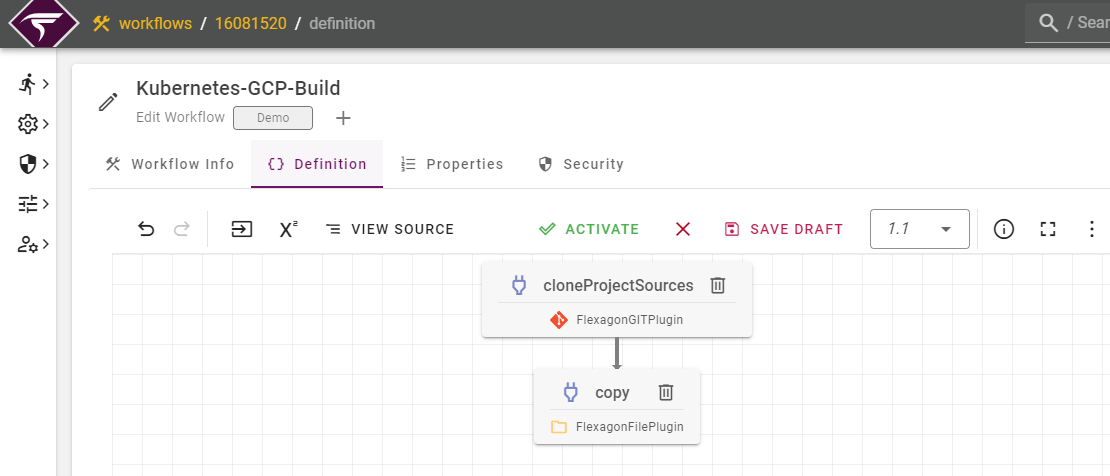
This step will clone the Git repository codebase into the project execution working directory. The Git URL will be retrieved from Source Control configured under Project Configuration.
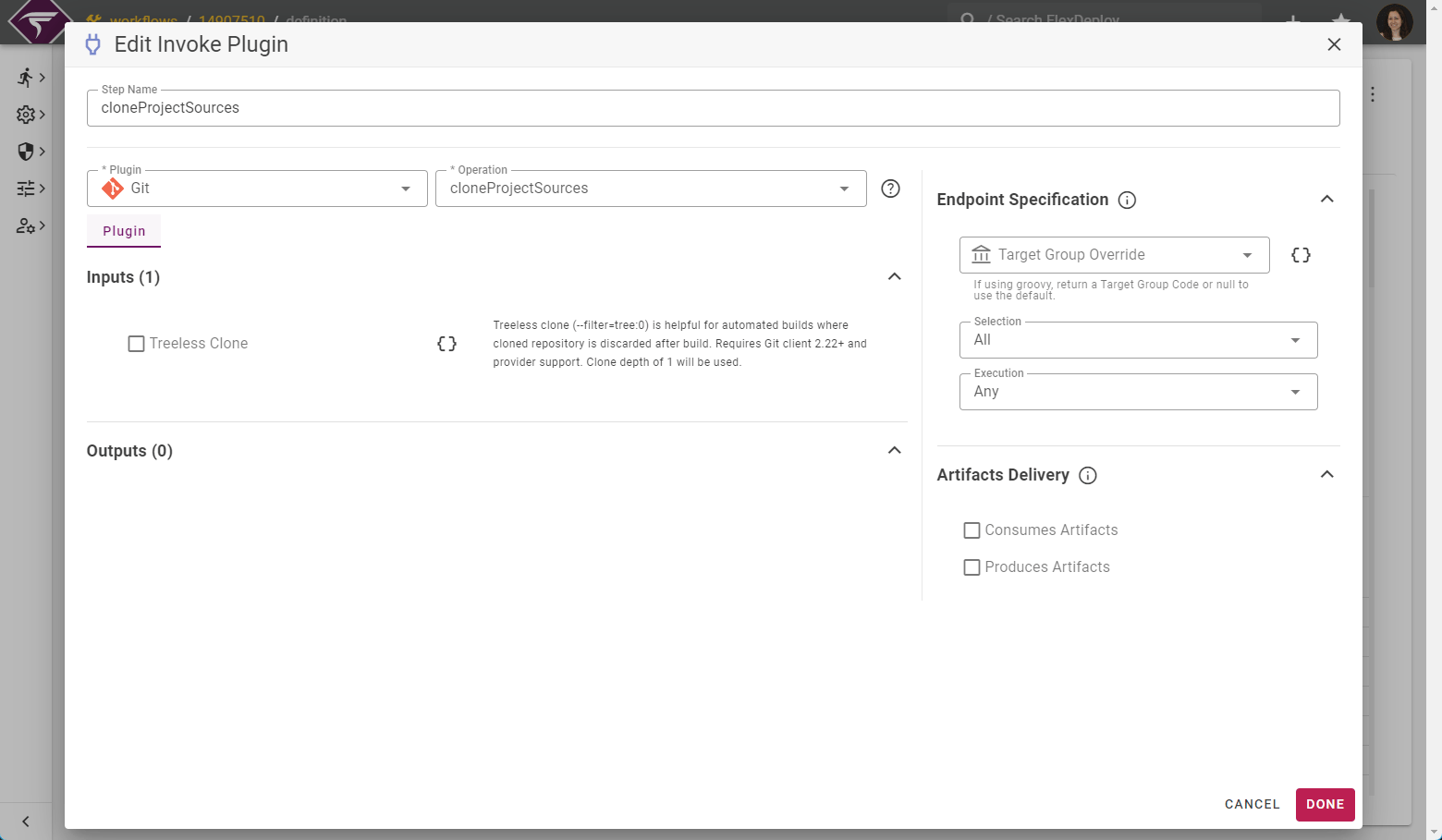
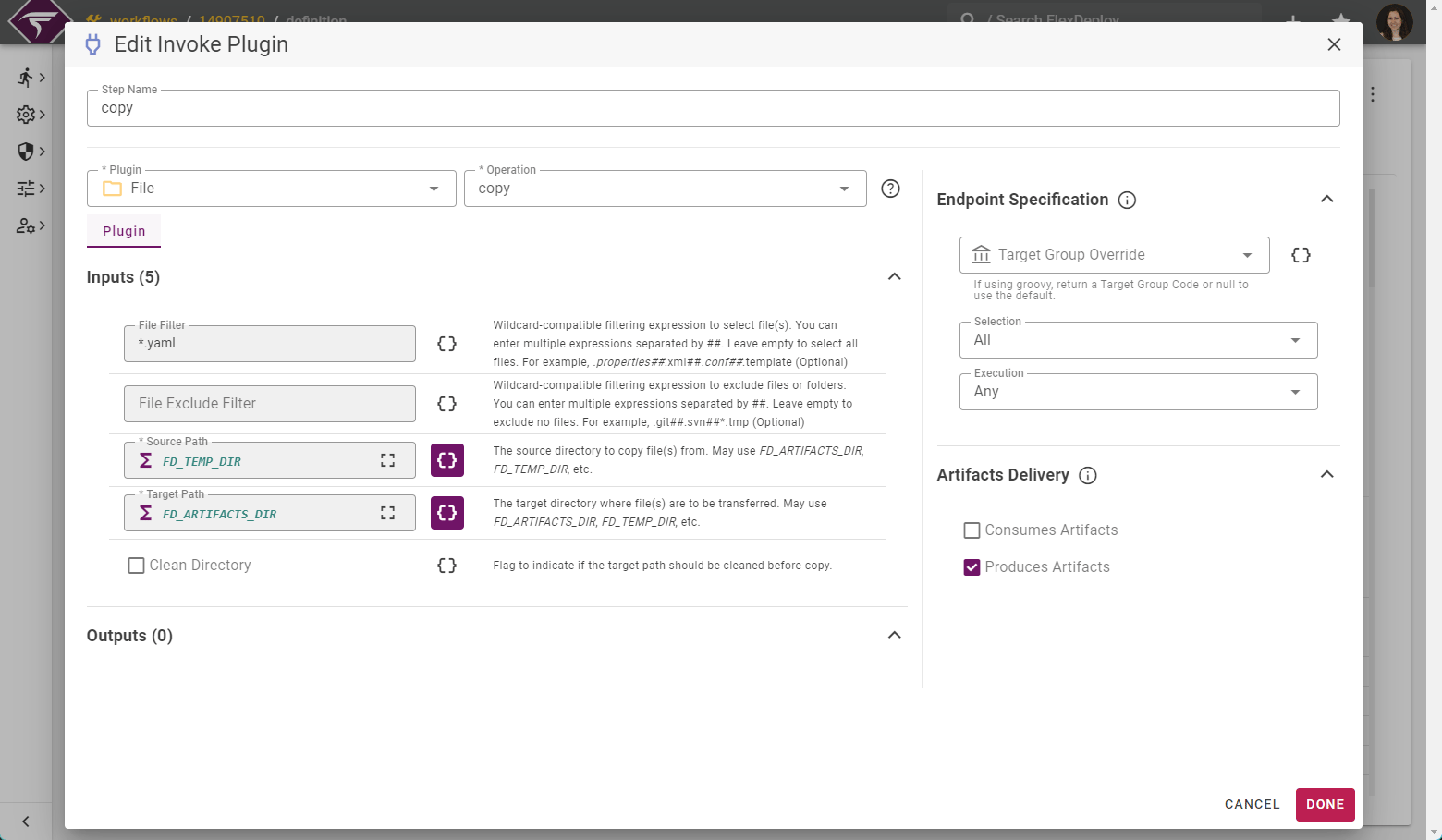
The below step will copy the manifest file to the artifact directory. Also check the Produces Artifact option to save the files as Artifact so that can be used from Deploy workflow.
Deploy Workflow
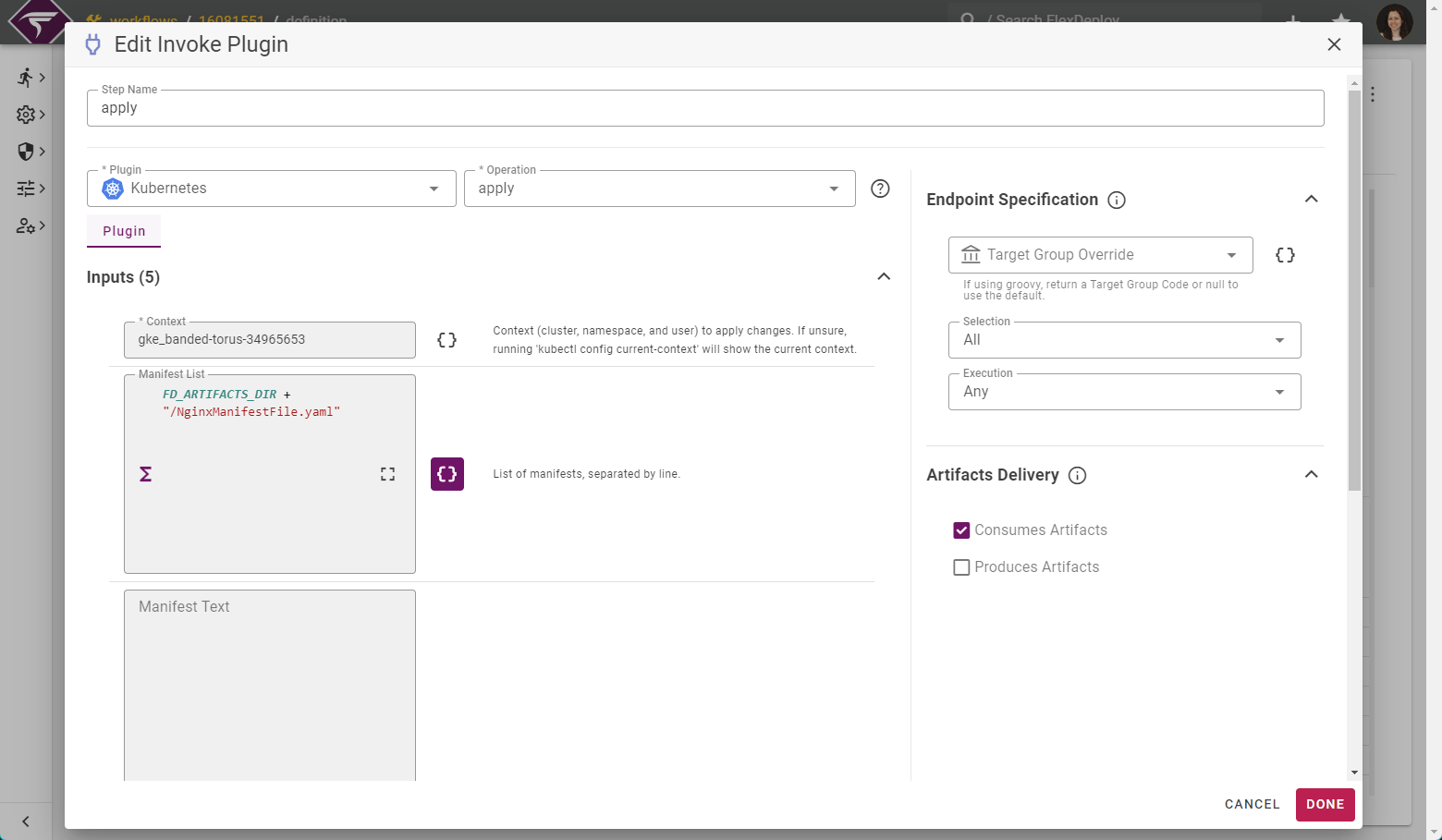
Below given is a sample deploy workflow to deploy application on a GKE cluster.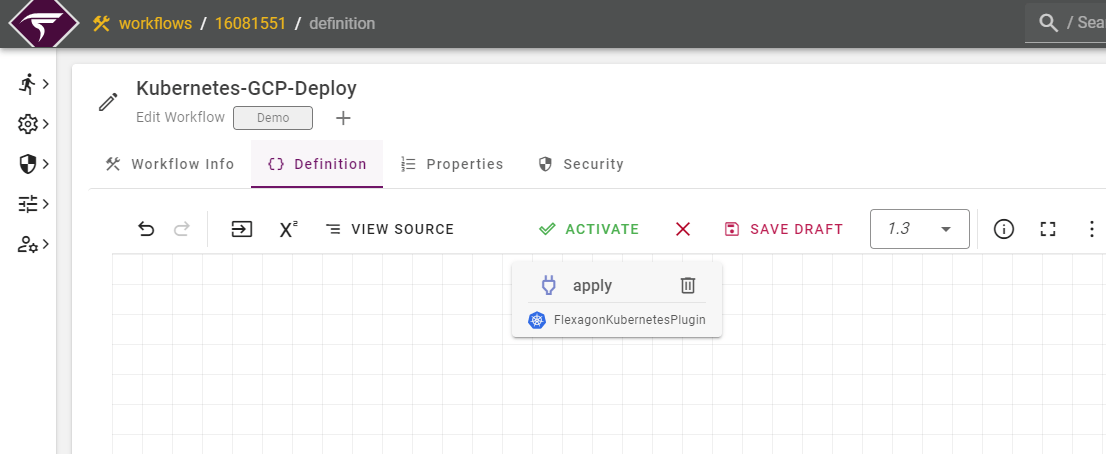
Project Configuration
Navigate to the Project tab and create a Project with a logical name (KubernetesGCP in this case)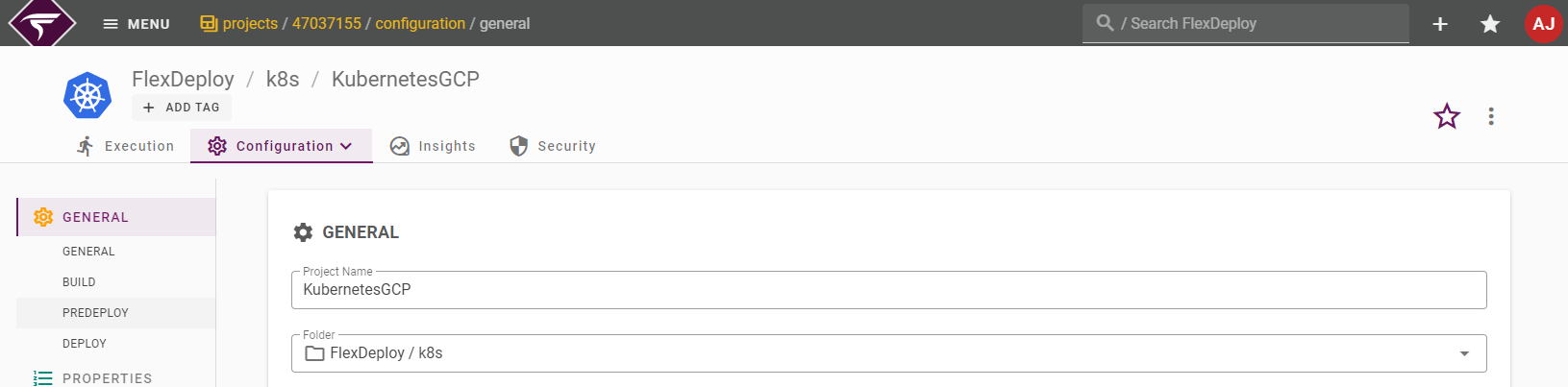
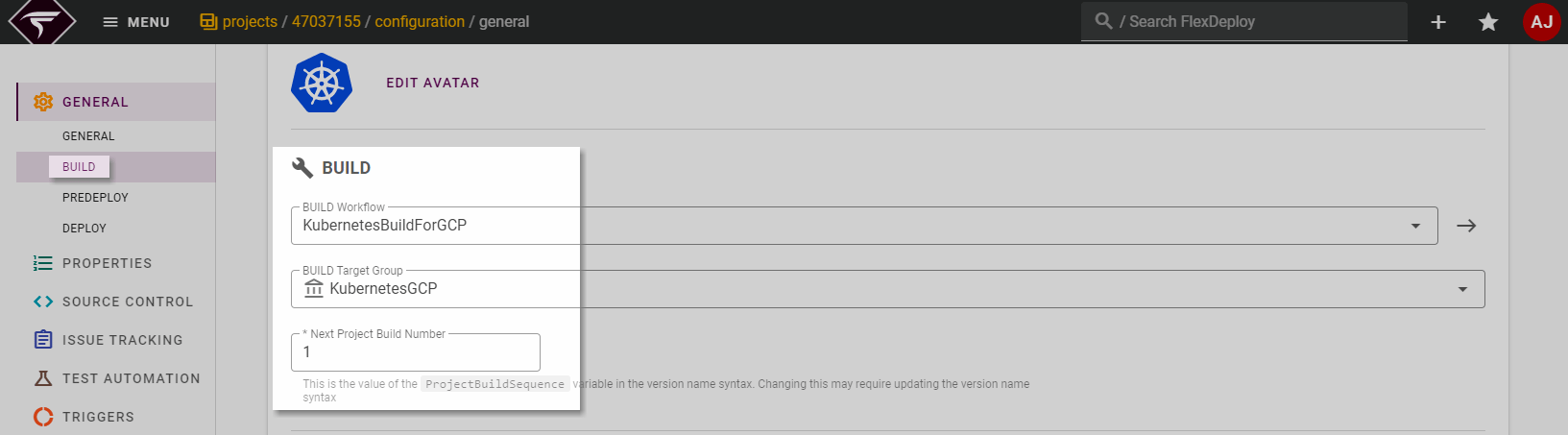
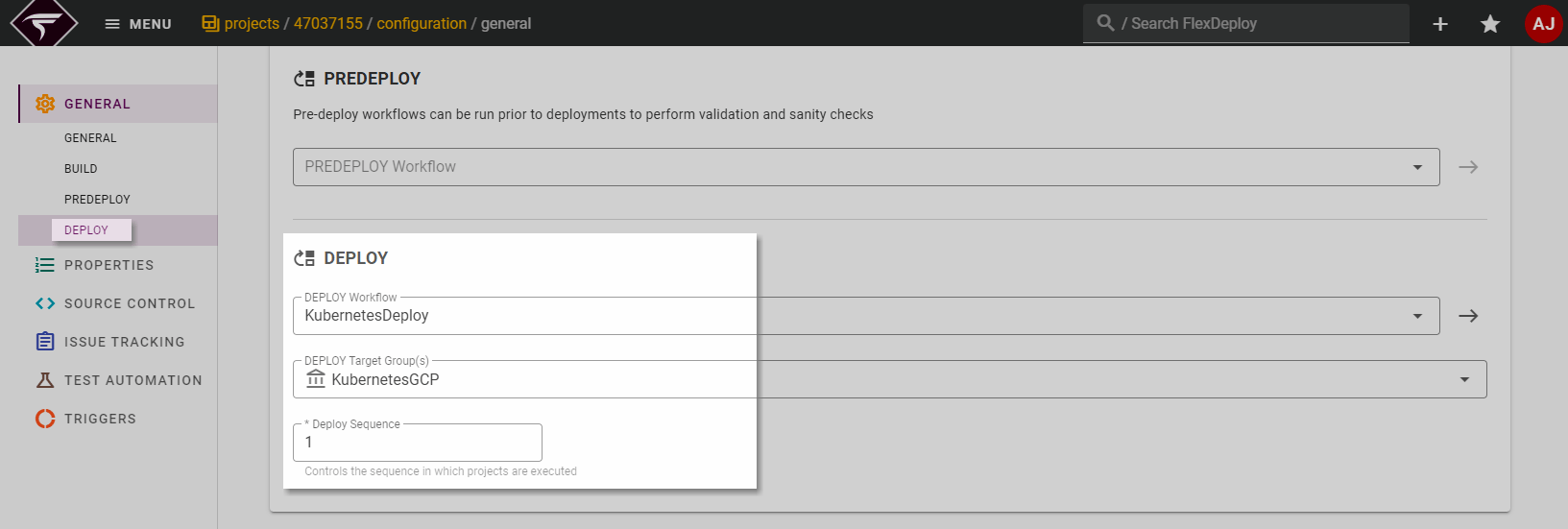
Source Control
Configure the Source SCM repository under Source Control as shown below.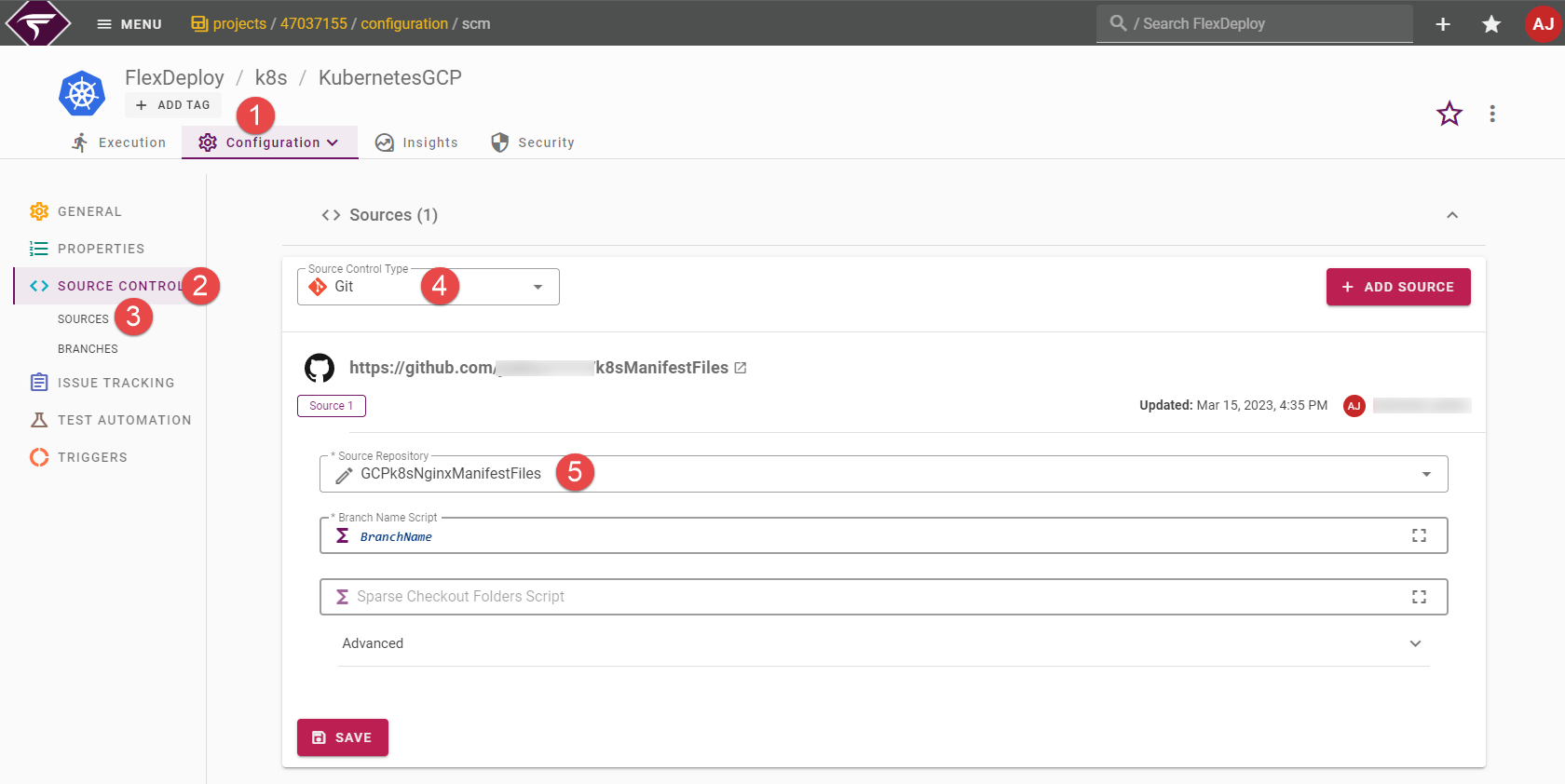
- To configure Project specific Source Control one first need to navigate to the Project Configuration tab.
- Next, expand the SOURCE CONTROL option from the left-hand pane.
- Select SOURCES for configuring the Source Repository
- Select the appropriate Source Control Type
- Configure Source Repository. For detailed steps of Source Control configuration please refer to Configure Source Control in FlexDeploy
Target Properties
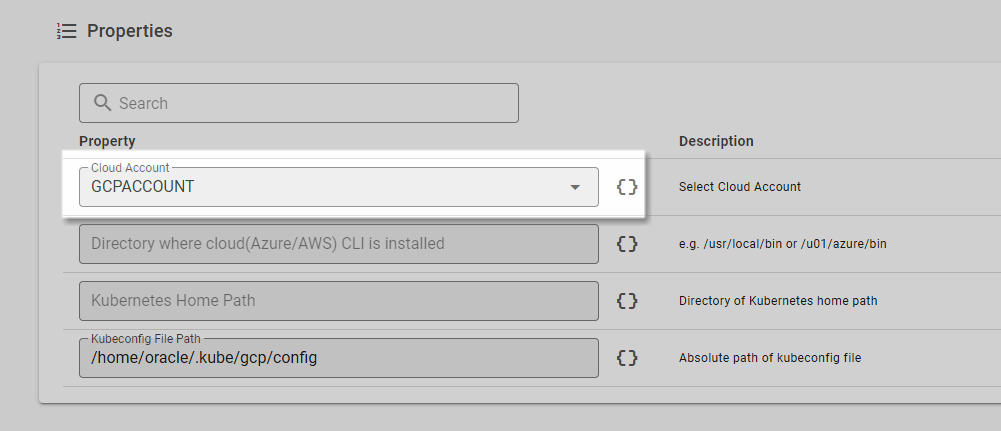
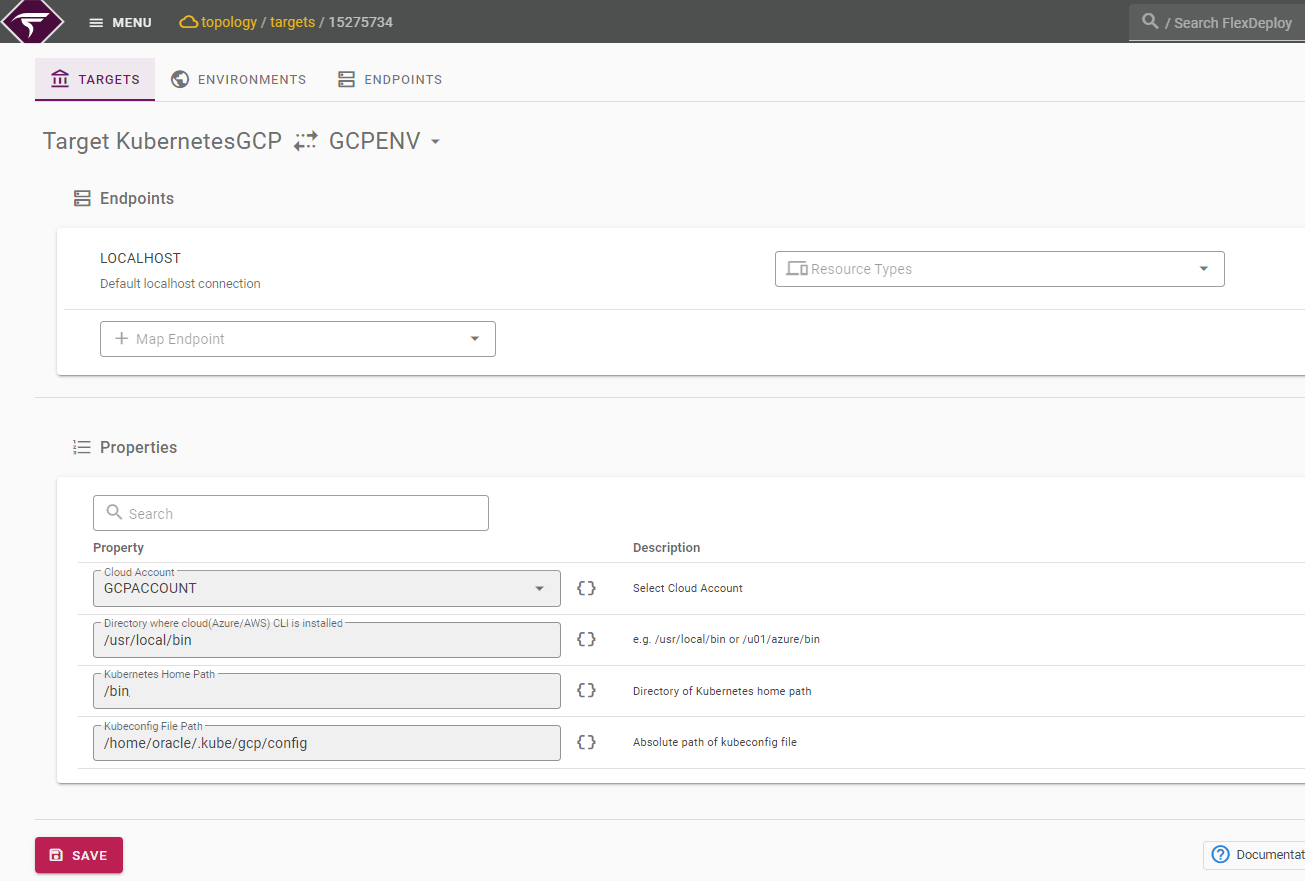
Select Topology from the menu and then select Targets. Select the target group and environment, provide the properties detail, according to the description.Properties | Mandatory field | Description |
Cloud Account | Optional | Select the Cloud Account to connect cluster. |
CLI Path | Optional | Directory where Cloud CLI is installed. |
Kubeconfig File Path | Optional | Absolute path of kubeconfig file |
Kubernetes home path | Optional | Directory of Kubernetes home path |
GIT Path | Optional | Path to the Git executable. Required only if Git is not on PATH. |
Cloud Account
The GCP Cloud account needs to be set here from the drop-down. It will show all Cloud Accounts configured under Topology, which we have already mentioned earlier.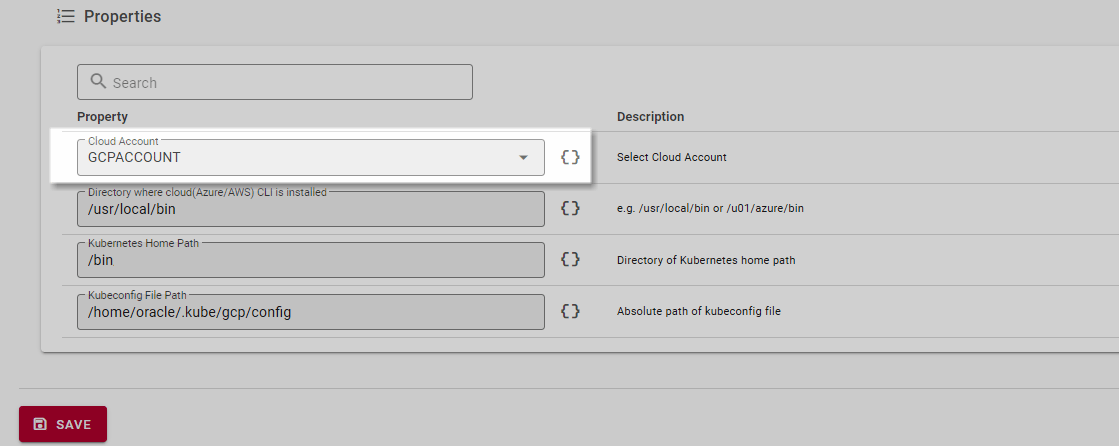
Kubeconfig file path
Absolute path of config file can be set as environment property, if path is not set then by default plugin look for config file in user directory.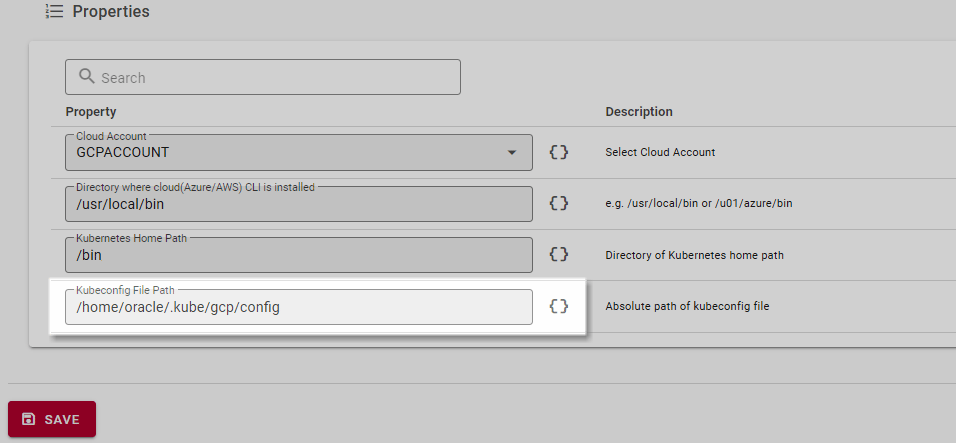
CLI path
GCP CLI path can be set as environment property, if it’s not set then by default plugin will check for CLI in system classpath.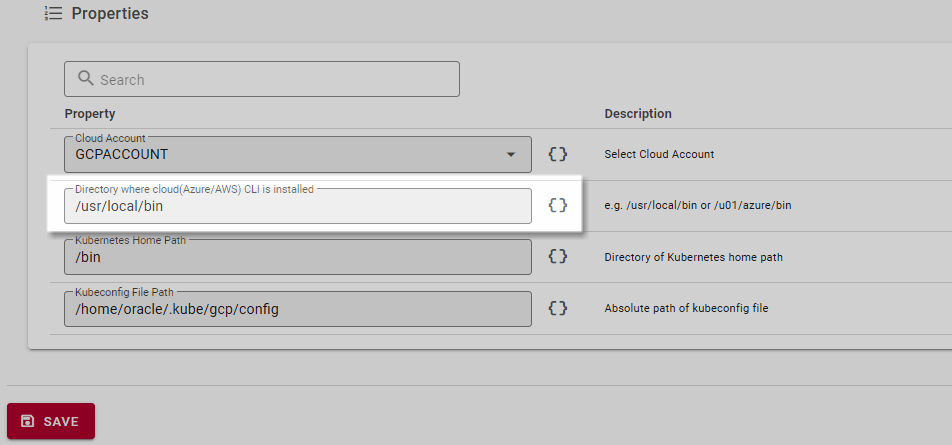
Kubernetes Home Path
Kubernetes home path can be set as environment property, plugin check for kubectl on the given directory.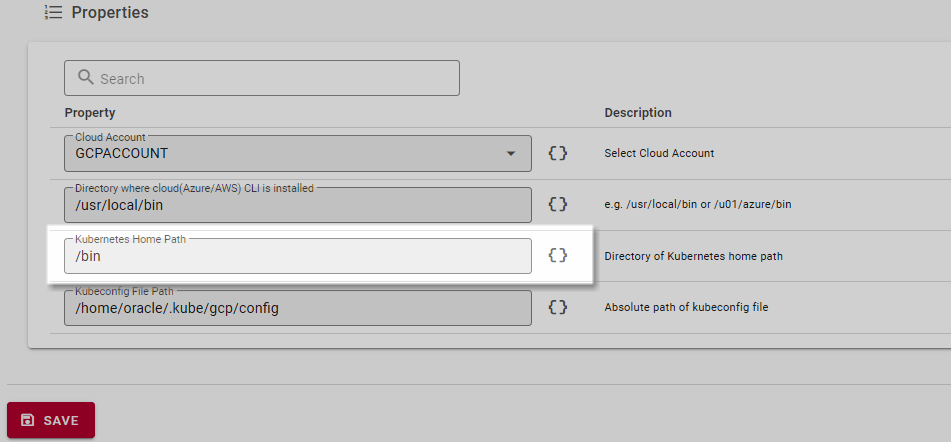
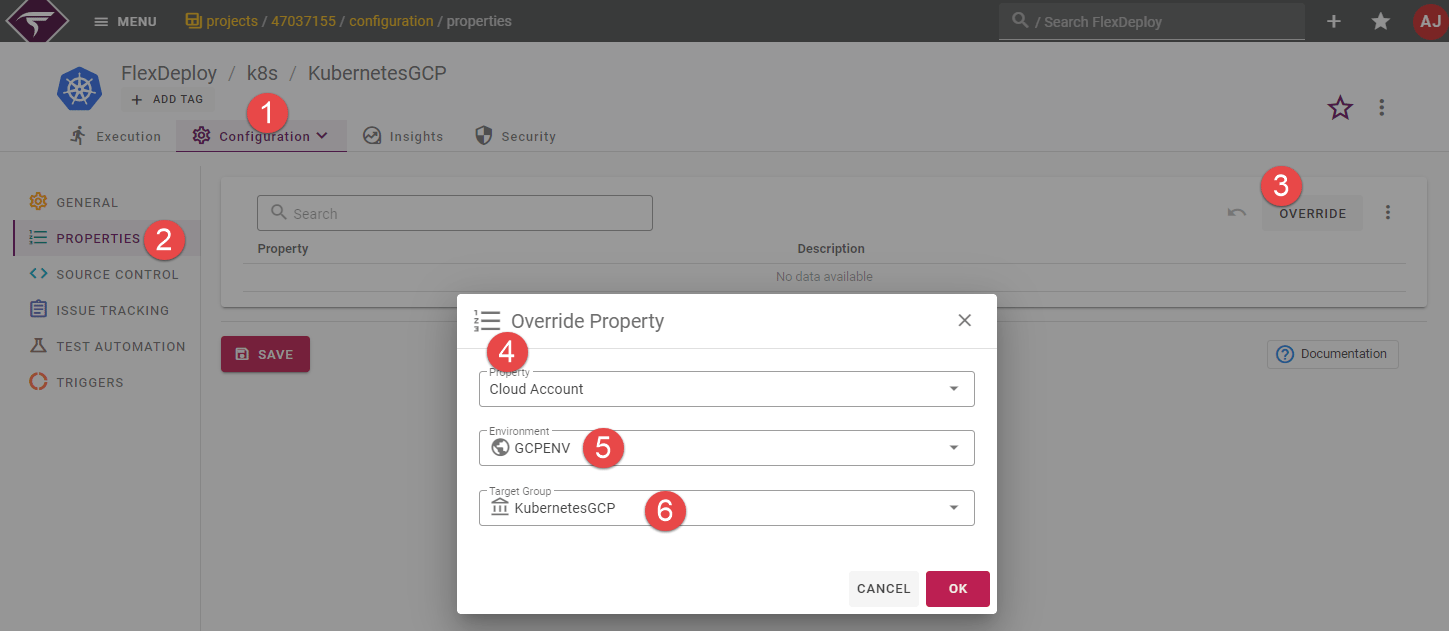
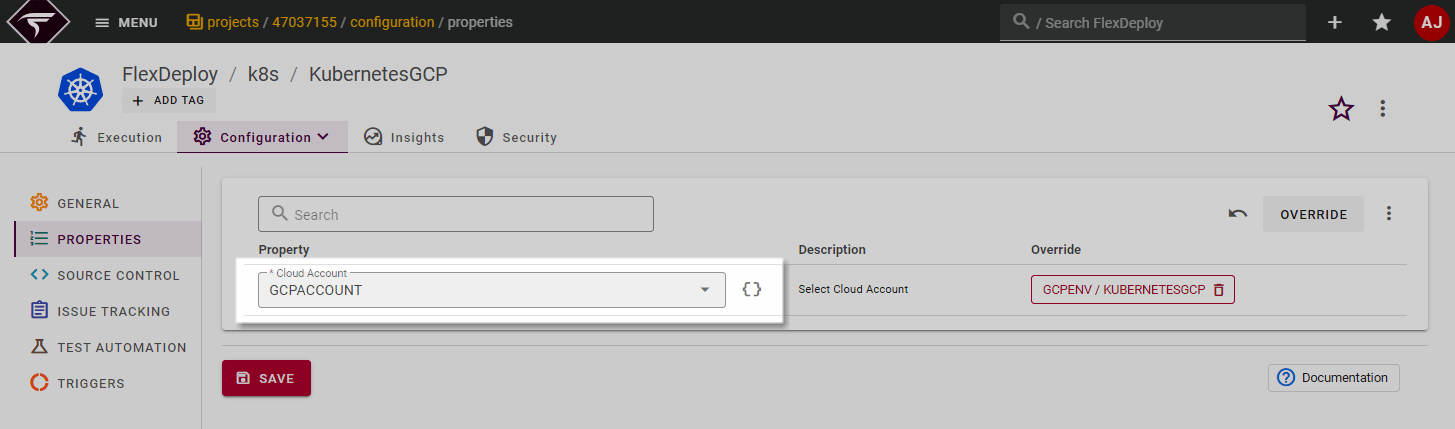
Override properties at Project level
Let assume a scenario, where we want to change Cloud account for any specific project. Apart from setting at environment level, it can also be set at project properties by using Override Property. Please check below mentioned steps.- Navigate to the Project Configuration tab as shown above.
- Next, select the PROPERTIES option from the left-hand pane.
- Click on the OVERRIDE option.
- Select the Cloud Account option from Property.
- Select the Environment from the drop down list.
- Select the Target Group from the drop down list.
Build Execution
For detailed steps on how to initiate deploy operation using Kubernetes plugin, please refer to Deploy through FlexDeploy for Kubernetes pluginPost deployment
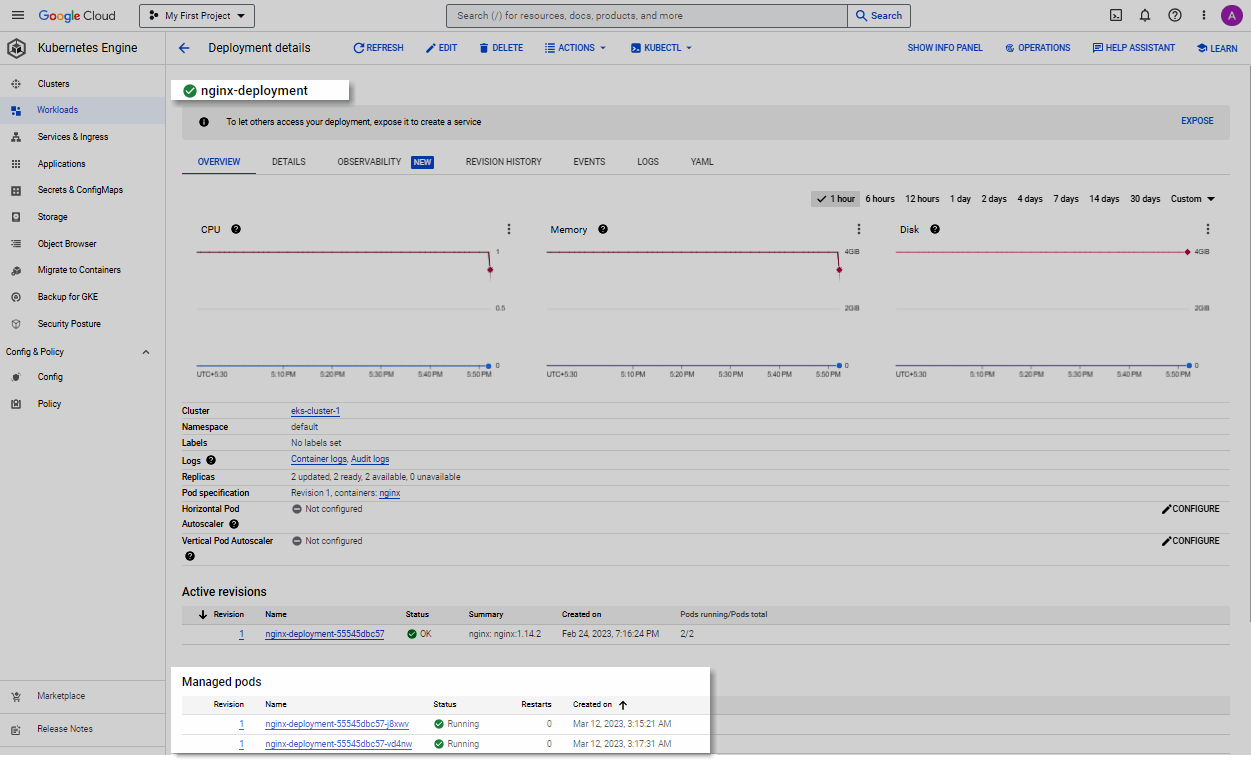
Post deployment success from plugin it can take a little while for the deployment and running. Once deployment successfully completed, we can see the related details on GKE cluster by using GCP console.